Endermax
Endermax
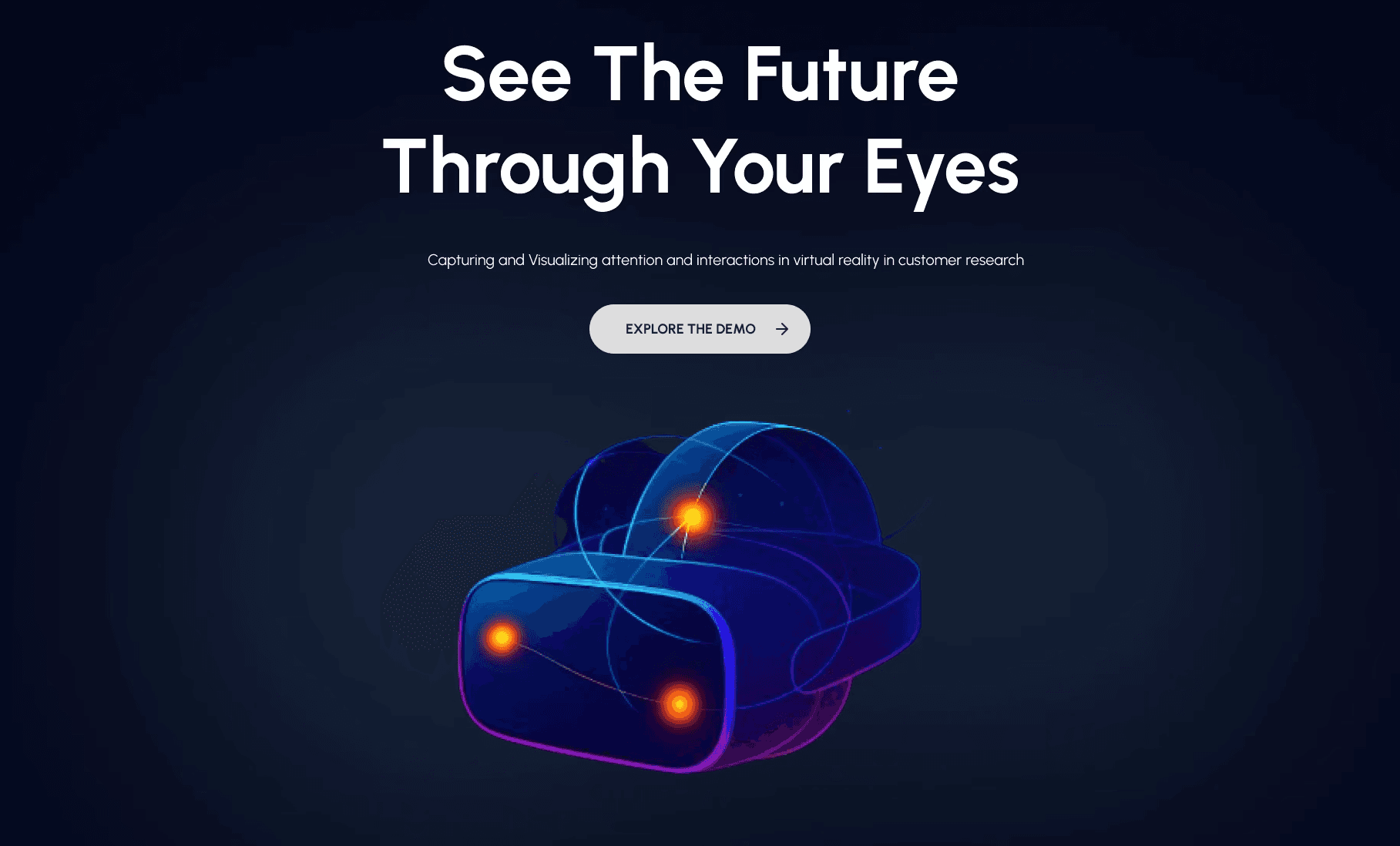
Experience the future of usability testing in mixed reality.
Experience the future of usability testing in mixed reality.
Virtual Reality
Web

About the project
Category
CCA Project
Industry
Architecture & Spatial Design
Timeline
5 Weeks
Year
2025
Problem
How an eye-tracking VR tool could help designers and researchers test spaces before they are built.
Designers and clients have no reliable way to understand how people will look, move, and navigate through a space before it is built. Important decisions about layouts, signage, and user flow are often made based on assumptions rather than real user behavior.
As a result, large and complex spaces such as hospitals, museums, and public buildings often cause confusion, poor wayfinding, and user frustration once they are constructed. These issues lead to costly late-stage changes, redesigns, and operational mistakes.
There is a lack of an early-stage testing tool that allows designers to see what users notice first, how they move through a space, and how they feel while navigating it. Without this insight, designers cannot validate their spatial decisions early, increasing risk and reducing user experience quality.
Solution
We designed a VR-based usability testing service that allows designers and researchers to evaluate public spaces before they are built.
The process begins with research into user behavior in public environments, supported by competitor analysis and expert interviews. Multiple concepts were explored and refined using a Sticky Decision method, ultimately focusing on VR-based spatial navigation and clear results visualization.
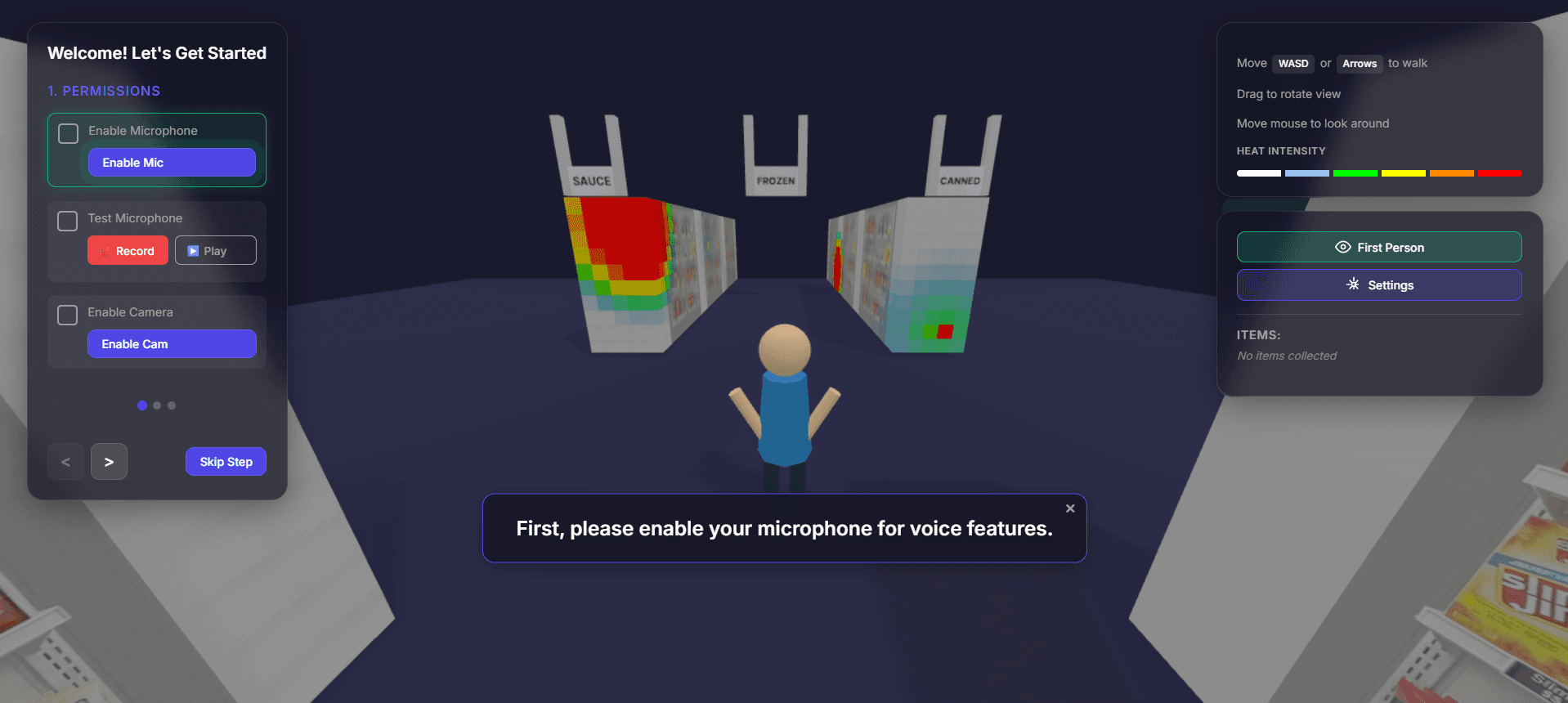
A medium-fidelity prototype was developed on endermax.com featuring:
3D navigation through virtual public spaces.
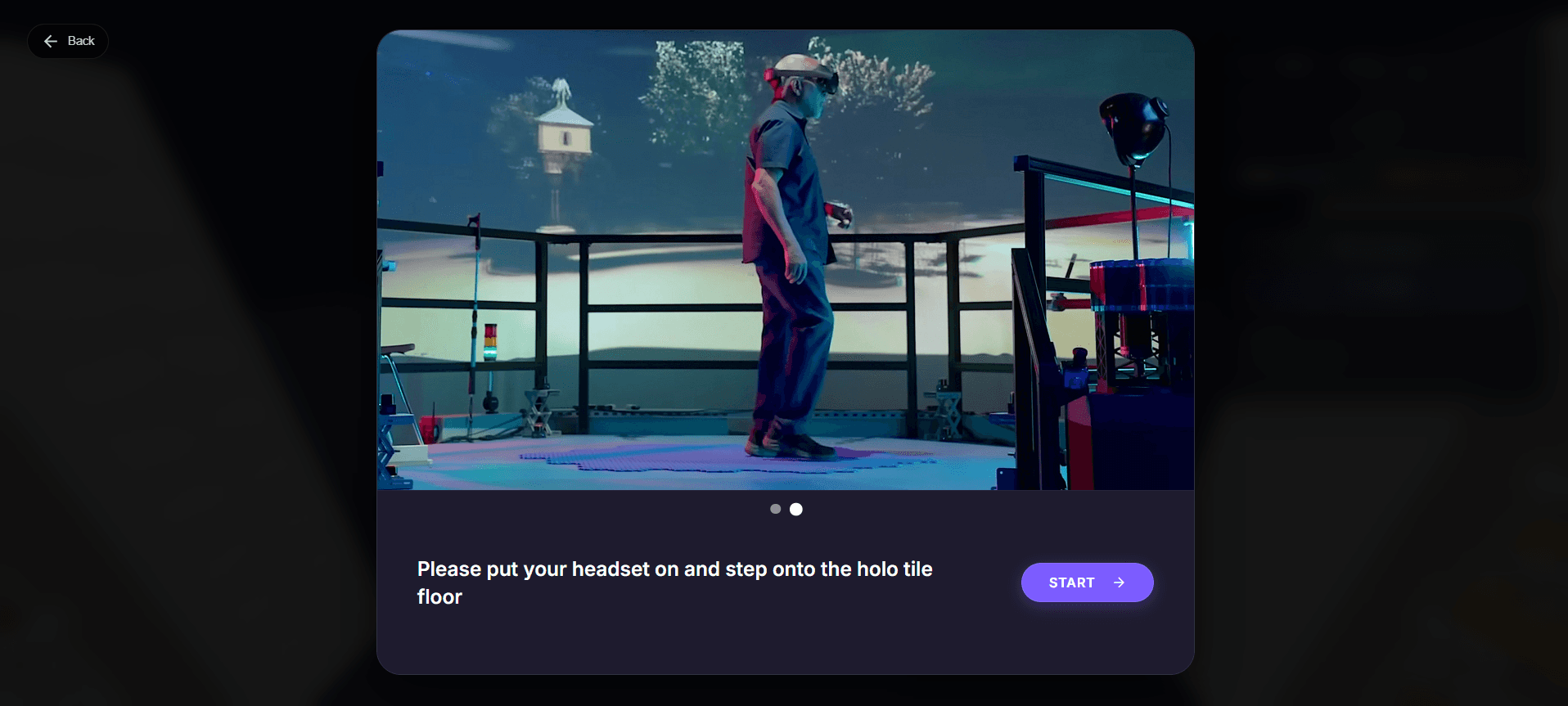
Natural walking using Disney Imagineering’s Holotile.
Task-based wayfinding prompts.
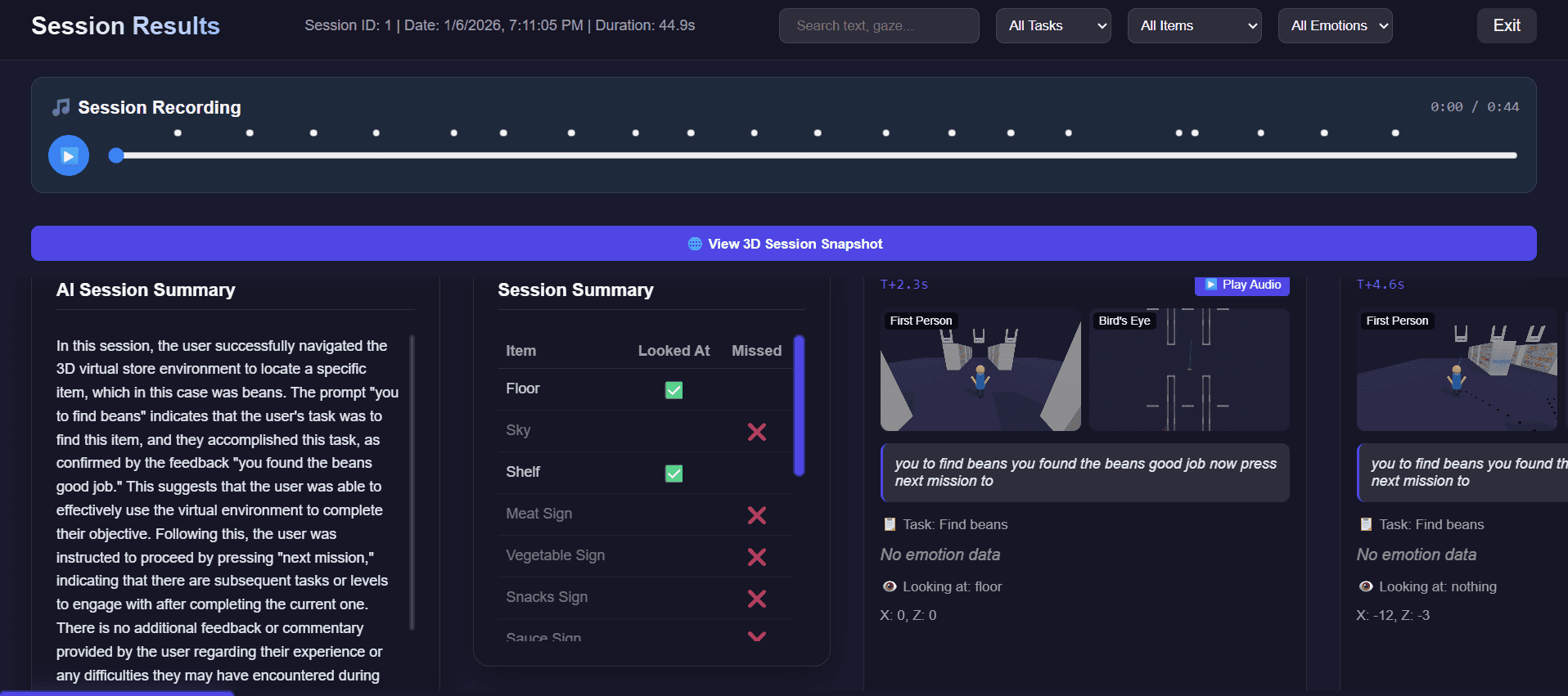
A results dashboard summarizing user behavior and insights.
Usability testing helped identify which features felt intuitive and which delivered the most value, guiding refinements to ensure the system could be realistically used in real-world spatial design projects.
In the final VR testing experience, participants stand on the Holotile while wearing a VR headset and navigate a 3D model of a public space. As users complete wayfinding tasks, the system captures eye-tracking data, gaze direction, facial expressions, emotional responses, and think-aloud feedback. This provides designers with clear insights into what users notice first, where confusion occurs, and how people emotionally experience a space enabling better design decisions before construction begins.
Problem
How an eye-tracking VR tool could help designers and researchers test spaces before they are built.
Designers and clients have no reliable way to understand how people will look, move, and navigate through a space before it is built. Important decisions about layouts, signage, and user flow are often made based on assumptions rather than real user behavior.
As a result, large and complex spaces such as hospitals, museums, and public buildings often cause confusion, poor wayfinding, and user frustration once they are constructed. These issues lead to costly late-stage changes, redesigns, and operational mistakes.
There is a lack of an early-stage testing tool that allows designers to see what users notice first, how they move through a space, and how they feel while navigating it. Without this insight, designers cannot validate their spatial decisions early, increasing risk and reducing user experience quality.
Solution
We designed a VR-based usability testing service that allows designers and researchers to evaluate public spaces before they are built.
The process begins with research into user behavior in public environments, supported by competitor analysis and expert interviews. Multiple concepts were explored and refined using a Sticky Decision method, ultimately focusing on VR-based spatial navigation and clear results visualization.
A medium-fidelity prototype was developed on endermax.com featuring:
3D navigation through virtual public spaces.
Natural walking using Disney Imagineering’s Holotile.
Task-based wayfinding prompts.
A results dashboard summarizing user behavior and insights.
Usability testing helped identify which features felt intuitive and which delivered the most value, guiding refinements to ensure the system could be realistically used in real-world spatial design projects.
In the final VR testing experience, participants stand on the Holotile while wearing a VR headset and navigate a 3D model of a public space. As users complete wayfinding tasks, the system captures eye-tracking data, gaze direction, facial expressions, emotional responses, and think-aloud feedback. This provides designers with clear insights into what users notice first, where confusion occurs, and how people emotionally experience a space enabling better design decisions before construction begins.
Problem
How an eye-tracking VR tool could help designers and researchers test spaces before they are built.
Designers and clients have no reliable way to understand how people will look, move, and navigate through a space before it is built. Important decisions about layouts, signage, and user flow are often made based on assumptions rather than real user behavior.
As a result, large and complex spaces such as hospitals, museums, and public buildings often cause confusion, poor wayfinding, and user frustration once they are constructed. These issues lead to costly late-stage changes, redesigns, and operational mistakes.
There is a lack of an early-stage testing tool that allows designers to see what users notice first, how they move through a space, and how they feel while navigating it. Without this insight, designers cannot validate their spatial decisions early, increasing risk and reducing user experience quality.
Solution
We designed a VR-based usability testing service that allows designers and researchers to evaluate public spaces before they are built.
The process begins with research into user behavior in public environments, supported by competitor analysis and expert interviews. Multiple concepts were explored and refined using a Sticky Decision method, ultimately focusing on VR-based spatial navigation and clear results visualization.
A medium-fidelity prototype was developed on endermax.com featuring:
3D navigation through virtual public spaces.
Natural walking using Disney Imagineering’s Holotile.
Task-based wayfinding prompts.
A results dashboard summarizing user behavior and insights.
Usability testing helped identify which features felt intuitive and which delivered the most value, guiding refinements to ensure the system could be realistically used in real-world spatial design projects.
In the final VR testing experience, participants stand on the Holotile while wearing a VR headset and navigate a 3D model of a public space. As users complete wayfinding tasks, the system captures eye-tracking data, gaze direction, facial expressions, emotional responses, and think-aloud feedback. This provides designers with clear insights into what users notice first, where confusion occurs, and how people emotionally experience a space enabling better design decisions before construction begins.
Visuals
See also